
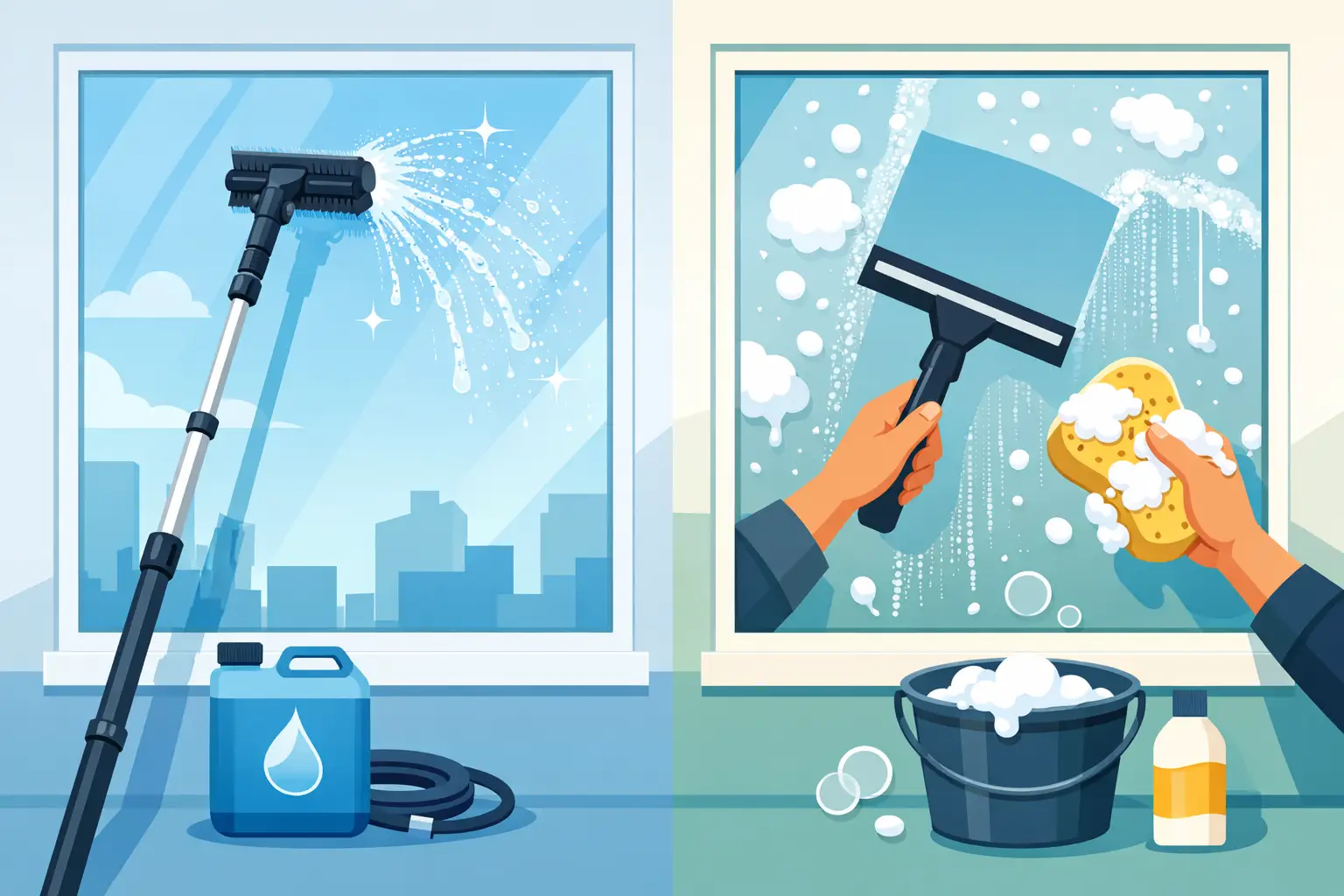
If you have ever looked out a freshly cleaned window and still caught streaks in the afternoon sun, you already know why pure water vs soap window cleaning is worth talking about. Both methods can make glass look better, but they do not perform the same way, especially on Southern California homes and businesses that deal with dust, heat, sprinkler spray, and everyday buildup.
For some windows, traditional soap-and-squeegee cleaning still does a solid job. For others, pure water cleaning delivers a clearer finish, better reach, and less residue left behind. The real answer is not which method sounds newer. It is which one gives you the best result for the type of glass, level of soil, and access your property has.
Pure water vs soap window cleaning: what changes the result?
The biggest difference comes down to what is left on the glass after cleaning. Soap cleaning uses a cleaning solution to loosen dirt, then the glass is wiped and squeegeed dry. When done well, it can leave windows looking great. But if too much solution is used, if the edges are not detailed properly, or if residue remains, you can end up with faint streaks or a film that catches light later.
Pure water cleaning works differently. The water is filtered to remove minerals and impurities, then applied to the glass and frames with specialized equipment. Because the water is purified, it attracts dirt, lifts it away, and dries spot-free without leaving soap residue behind. That is the part many property owners notice most – less haze, fewer spots, and a cleaner finish that stays sharp.
This matters even more on exterior glass. In Corona, Norco, Eastvale, and surrounding areas, outdoor windows collect dust fast. Add hard water exposure from sprinklers or light mineral deposits, and a basic wipe-down may not be enough. A method that rinses thoroughly without leaving cleaning agents behind often gives a more polished result.
Where soap window cleaning still makes sense
Soap cleaning is not outdated. In skilled hands, it remains an effective method for many interior windows and certain exterior jobs. It is especially useful when a technician needs tight control over detailing, or when interior glass has fingerprints, smudges, grease, or other buildup that responds well to traditional hand-cleaning.
Inside the home or office, soap-and-squeegee work can be ideal because the technician can closely manage drips, edges, and surrounding surfaces. It is also helpful on glass that needs extra attention around tracks, corners, or French panes where careful hand work makes a visible difference.
For storefronts and ground-level commercial glass, soap cleaning may also be the right fit if there is frequent touch-up maintenance. When appearance matters daily, traditional methods can keep front-facing glass looking clean and presentable between deeper service visits.
The trade-off is that soap cleaning relies heavily on technique. A rushed job can leave lines, residue, or moisture around the edges. It also does not solve the safety challenge of reaching higher glass unless ladders or lifts are involved.
Why pure water cleaning has become a go-to method
Pure water cleaning has earned its place because it solves more than one problem at once. It improves finish quality on many exterior windows, and it helps technicians clean upper-floor glass with reduced ladder use. That combination matters for both safety and efficiency.
With water-fed pole systems, purified water can be delivered to windows that are harder to reach from the ground. The brush agitates dirt, the pure water rinses it away, and the glass dries clear. Since there are no minerals in the water, there is nothing left behind to spot the glass as it dries.
For homeowners, that often means second-story windows can be cleaned more safely and with less disruption. For business owners, it can mean cleaner upper glass without constant ladder positioning near entrances, walkways, or customer areas.
Another advantage is residue. Soap can leave trace material behind, even when the window looks fine at first. Exterior glass exposed to dust may attract grime faster when any residue remains. Pure water cleaning avoids that issue, which is one reason many people feel the clean lasts longer.
Pure water vs soap window cleaning for homes
Residential properties usually need both methods at different times. Exterior windows often benefit most from pure water, especially on larger panes, upper-floor glass, and windows exposed to the elements every day. The spot-free rinse helps bring back that bright, clean look homeowners actually notice from both inside and outside.
Interior windows are a little different. Kids’ handprints, pet nose marks, cooking residue, and everyday smears often call for hands-on detailing. That is where traditional soap cleaning still shines. A professional can manage the mess carefully and leave the surrounding area just as tidy as the glass.
That is why the best residential service is not about choosing one method forever. It is about using the right method where it performs best. A company that understands both can give you better results than one that treats every pane the same.
Pure water vs soap window cleaning for businesses
Commercial properties care about appearance, but they also care about speed, safety, and consistency. If you run a storefront, office, or service business, dirty windows do more than block the view. They change how customers read your attention to detail.
For lower entry glass and heavily touched surfaces, soap cleaning can still be the practical choice. It handles fingerprints and traffic-related grime well. For taller buildings, larger glass sections, and recurring exterior maintenance, pure water cleaning is often the stronger option. It is efficient, produces a clear finish, and helps reduce the need for ladders in active customer areas.
That balance is especially valuable when you need recurring service. A polished business exterior helps customers feel confident before they even step inside. Clean glass sends a message that the property is cared for, professional, and open for business.
Safety is part of the cleaning method
Most property owners focus first on streaks and shine, which makes sense. But safety should be part of the conversation too. One of the biggest advantages of pure water systems is that they allow more windows to be cleaned from the ground. That lowers risk and can make service smoother on homes with awkward landscaping, narrow side yards, or high exterior glass.
Traditional methods often require more ladder work for upper floors. There is still a place for that when the job demands it, but minimizing ladder use whenever possible is simply a smarter way to work. For customers, that means less worry. For technicians, it supports a safer, more controlled process.
This is one reason many professional glass care providers have invested in pure water technology. It is not just about using a modern tool. It is about delivering strong results while keeping safety standards high.
Which method leaves windows cleaner longer?
It depends on what is on the glass and where the window is located. Interior glass cleaned with soap and detailed properly can stay clean for a long time because it is protected from weather. Exterior glass is different. It faces dust, pollen, sprinkler overspray, and windblown debris.
On exteriors, pure water often has the edge because it leaves no soap residue behind. Less residue usually means less for new dirt to cling to. That does not make windows dirt-proof, of course, but it can help maintain that clean, bright look longer between services.
If the glass has heavy grease, adhesive, paint specks, or mineral staining, neither standard soap cleaning nor pure water alone is always enough. Those situations may call for restoration work or specialized treatment. That is another reason cookie-cutter pricing and one-size-fits-all promises often miss the mark.
The best answer is not one method. It is professional judgment.
When customers ask whether pure water or soap is better, the honest answer is that the best results usually come from knowing when to use each. A trained team looks at glass condition, access, frame type, window height, surrounding surfaces, and the kind of buildup present. Then the method fits the job.
That is the approach companies like Window Cowboys bring to homes and businesses that want more than a quick wipe-down. Professional-grade tools, insured technicians, and service built around convenience make a difference, but the real value is getting glass cleaned the right way the first time.
If you want windows that sparkle instead of just looking less dusty, ask how the glass will actually be cleaned. The method matters, and the right one can brighten your property more than you might expect.