
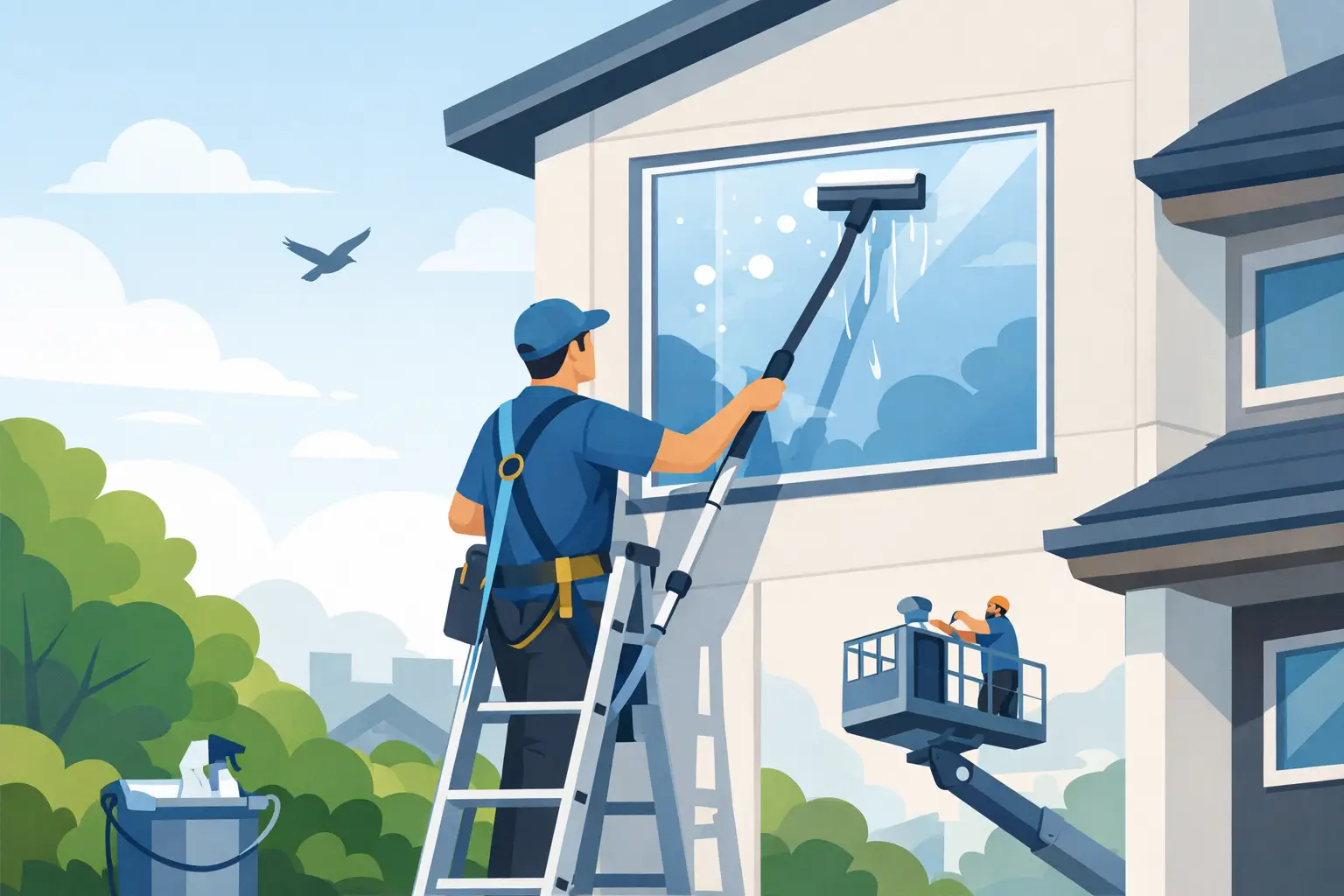
Second-story windows always seem to collect the most dirt and the least patience. They catch hard water spots, dust, pollen, and spider webs, then sit just high enough to turn a simple chore into a risky afternoon. If you are wondering how to clean second story windows without ending up on a shaky ladder or staring at streaks from the driveway, the good news is that there is a safer and smarter way to get the glass shining again.
How to clean second story windows without taking big risks
The first thing to know is that second-story window cleaning is less about elbow grease and more about access. On ground-floor glass, you can fix mistakes quickly. Upstairs, every bad angle, weak tool, or rushed step gets magnified. That is why safety has to come before results.
For most homeowners, the safest DIY approach is cleaning from the ground with an extension pole and a purified or low-residue water method. If your windows tilt inward, you may also be able to clean the outside from inside the home. What you want to avoid is climbing high with a bucket in one hand and a squeegee in the other, especially on uneven soil, concrete edges, or landscaping that limits ladder placement.
There is also a quality issue to think about. Second-story windows are more exposed to sun and wind, which means soap can dry too quickly and leave streaks behind. If you have ever cleaned glass that looked good up close but terrible from the curb, that is usually the reason.
Start by figuring out what kind of access you actually have
Before grabbing tools, look at the window style. Double-hung windows sometimes tilt in, which can make outside cleaning much easier. Fixed panes, transom windows, and large picture windows are a different story. Those usually require exterior access or long-range equipment.
You should also check what sits below the glass. A flat walkway is one thing. Sloped dirt, decorative rock, shrubs, AC units, or a patio cover can make ladder use much more dangerous. In Southern California neighborhoods, we often see second-story windows above tile roofs, narrow side yards, or landscaped beds that do not allow for stable footing. In those cases, the question is not just how to clean second story windows. It is whether DIY access makes sense at all.
If screens are installed, plan for those too. Many upper screens are not easy to remove from the ground, and cleaning the glass without addressing a dusty screen can limit the final result.
The tools that actually help
If you are going to do this yourself, the right setup makes all the difference. A basic hose and paper towels will not get you far. What works better is an extension pole, a soft brush or sleeve attachment, a quality squeegee if the angle allows, and a cleaning solution that does not leave heavy residue.
For some homeowners, a hose-fed brush works well enough for light maintenance. For others, especially where hard water is an issue, purified water systems produce a better finish because they rinse cleaner and dry spot-free. That is one reason professional crews use pure water technology for upper-floor cleaning. It reduces the need to climb, cuts down on soap residue, and delivers a clearer shine on exterior glass.
A few things are worth avoiding. Abrasive pads can scratch glass. Strong household cleaners may leave film. And pressure washers are rarely a good answer for windows, seals, or screens. They can force water where it should not go and create more problems than they solve.
A practical way to clean second story windows from the ground
If your windows can be reached safely with an extension pole, start by rinsing loose dust and debris. This matters more than people think. If you scrub dry grit into the glass, you make the job harder and risk fine scratching over time.
Next, apply your cleaning solution with a strip washer or soft brush attachment on the pole. Work from top to bottom and do not flood the edges. The goal is to loosen dirt evenly, not soak the frame.
If your pole setup allows for controlled squeegee work, clean in straight passes and wipe the blade between strokes. That said, squeegeeing from the ground is tricky. The angle can make it hard to maintain even pressure, and uneven pressure creates lines. For many homeowners, a rinse-and-dry method with purified water is more forgiving on upper windows than trying to squeegee blindly from below.
Take a step back and inspect the glass from different angles. Sunlight exposes missed spots fast. You may need a second pass around corners where cobwebs or pollen build up.
Cleaning from inside can work, but only on certain windows
Some second-story windows are much easier than they look because they tilt inward. If that is the case, unlock the sash, tilt it carefully, and clean the outside pane from inside the room. Use a towel along the sill to catch drips and keep the floor dry.
This method is convenient, but it depends completely on the window design and condition. Older windows may stick. Some do not tilt at all. And leaning out from an open upstairs window to reach one extra inch of glass is never a smart trade.
For commercial properties, this option usually does not apply. Large storefront systems, fixed office windows, and upper glass panels often need exterior tools and a more professional setup.
When DIY stops being worth it
There is a point where cleaning your own windows costs more in time, frustration, and risk than it saves. That point comes sooner if the windows are above a roofline, blocked by landscaping, stained with mineral buildup, or simply too numerous to handle well.
Hard water spotting is a common example. Regular dirt can usually be washed away. Mineral deposits often need specialized treatment and technique. If you scrub too aggressively, you can damage the glass. If you use the wrong product, you may leave haze behind.
The same goes for homes and businesses that care a lot about presentation. Streaks on upper windows are surprisingly visible from the street. Clean lower glass with spotted upper panes can make the whole property look unfinished. For a business, that affects curb appeal. For a homeowner, it takes away from the crisp, well-kept look people want from the front elevation.
That is why many property owners choose a professional service for second-story work even if they handle easier windows on their own.
What professional cleaning changes
Professional second-story window cleaning is not just about having a taller ladder. The real difference is method, consistency, and safety controls. Trained, insured technicians know how to assess access, choose the right equipment, and clean efficiently without turning the property into an obstacle course.
Pure water cleaning is especially useful on upper-floor exterior glass. The water is filtered to remove minerals and impurities, so it dries without leaving spots. That means fewer streaks, less residue, and less dependence on risky ladder work. It is a cleaner process for the glass and a more practical one for many two-story homes and commercial buildings.
There is also the convenience factor. Most people do not want to spend a Saturday wrestling with extension poles in the sun, then realizing the windows still look dull at sunset. A reliable crew gets the job done faster and with a better final look. For busy families and business owners, that matters.
At Window Cowboys, that is exactly the kind of work we take pride in – making upper-floor glass sparkle without asking customers to deal with the hassle or the hazard themselves.
How often should second-story windows be cleaned?
It depends on exposure and expectations. Homes near traffic, construction, or open dusty areas may need more frequent service. Properties with sprinklers hitting the glass can build hard water stains faster. Businesses usually benefit from a regular schedule because appearance is part of the customer experience.
For many homes, two to four cleanings a year keeps second-story windows looking bright without letting buildup get out of hand. If you wait too long, the work gets more difficult and the results may require extra restoration instead of standard cleaning.
The better goal is clean windows without the gamble
If you want to know how to clean second story windows, the honest answer is this: use the safest access method available, use tools that leave less residue, and be realistic about when the job has crossed into pro territory. Sparkling glass should improve your property, not turn into a balancing act.
When the windows are high, awkward, or heavily spotted, there is real value in handing the work to people who do it every day. Clean glass brightens your home, sharpens your business, and lets the whole property feel better cared for. That is a good result, and it should come without the gamble.