
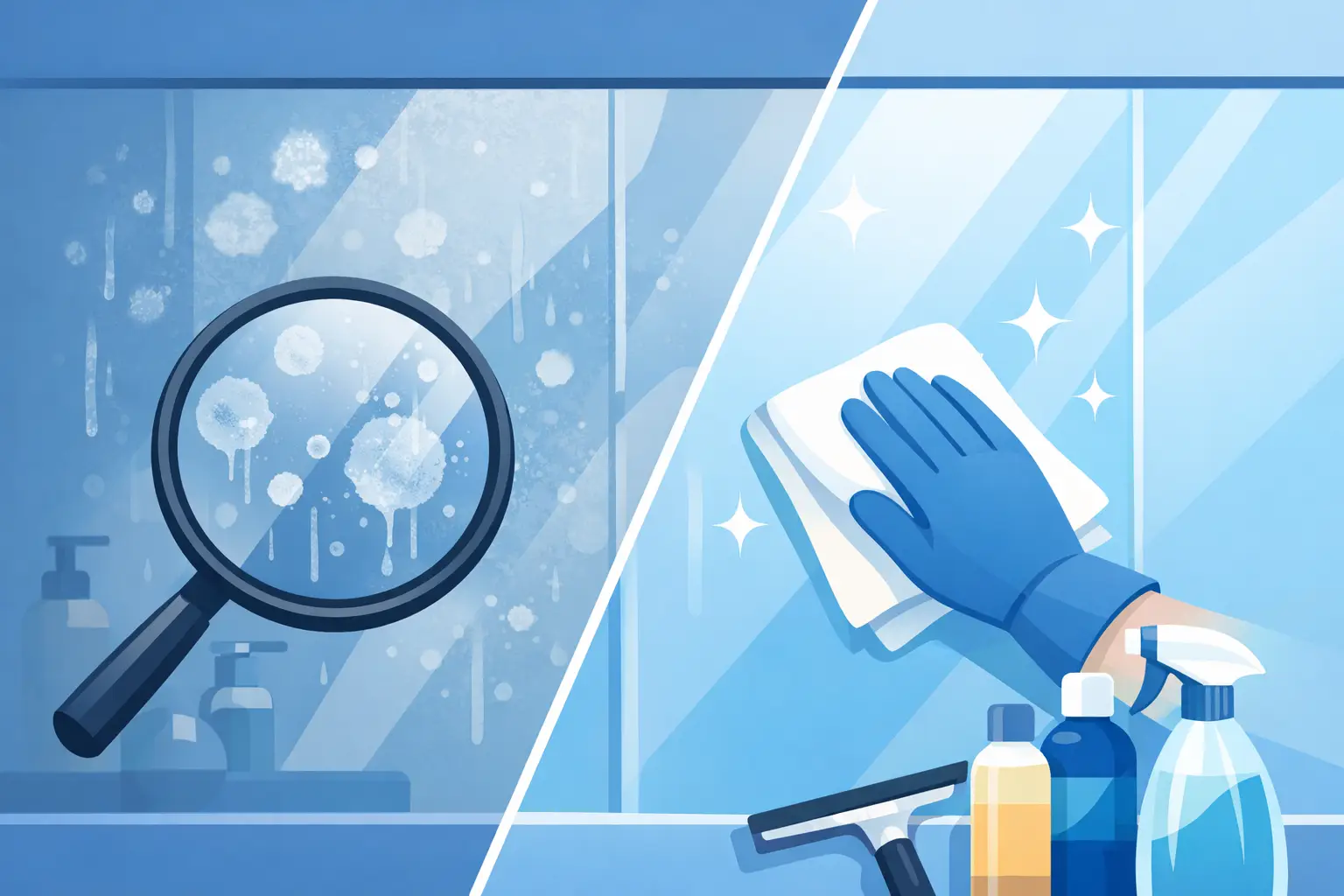
If you have ever cleaned a window, stepped back, and still seen cloudy white marks staring back at you, you already know how frustrating hard water spots can be. Knowing how to remove hard water spots the right way matters because the wrong method can waste time, scratch glass, or leave behind even more residue.
In Southern California, this is a common problem. Sprinklers hit lower windows, shower doors collect mineral buildup, and storefront glass can start to look dull even when it has been wiped down regularly. Those spots are not just dirt. They are mineral deposits, usually calcium and magnesium, left behind after water evaporates.
That distinction matters because hard water spots do not always come off with standard glass cleaner. If the buildup is fresh, you can usually remove it with a mild acidic solution and a little patience. If it has been sitting for months, especially in direct sun, it may have started to etch the glass. At that point, cleaning gets more delicate and results can vary.
What actually works to remove hard water spots
The best first step is to figure out whether you are dealing with surface deposits or permanent damage. Run a fingertip over the glass. If it feels rough or chalky, there is likely mineral buildup on top of the surface. If it feels smooth but still looks hazy, the glass may be etched.
For surface spots, start with the least aggressive method. A mix of white vinegar and water is the classic option for a reason. Vinegar helps break down mineral deposits without being overly harsh on glass. Spray it generously on the affected area, let it sit for a few minutes, then gently scrub with a soft non-scratch pad or microfiber cloth.
If plain vinegar is not strong enough, you can move up to a specialty hard water stain remover made for glass. This is often the better choice for older buildup because it is formulated to dissolve minerals more effectively. The trade-off is that some products are too aggressive for tinted glass, coated surfaces, or surrounding finishes, so label instructions matter.
How to remove hard water spots from windows
Exterior windows usually get hard water spots from irrigation overspray, rain mixed with minerals, or hose rinsing that dries too quickly. The challenge here is not just removing the spots. It is doing it without leaving streaks or pushing grime across the glass.
Start by rinsing loose dirt from the window frame and glass. If you skip that step and go straight to scrubbing, you can grind grit into the surface. Apply your vinegar solution or glass-safe mineral remover, let it dwell briefly, and work in small sections. Wipe with a clean microfiber cloth, then rinse and dry thoroughly.
Drying is where many DIY jobs go sideways. If mineral-heavy water is used for the final rinse, new spots can form almost immediately. That is one reason professional glass cleaners often use pure water systems. Purified water removes contaminants and dries spot-free, which helps windows stay cleaner and brighter.
For upper-floor windows or hard-to-reach panes, the method matters just as much as the cleaner. Climbing ladders with spray bottles and towels is not worth the risk for most homeowners or business owners. If the glass is high, oversized, or heavily spotted, this is usually the point where calling a trained crew saves time and protects the finish.
How to remove hard water spots from shower doors
Shower glass is a different battle because the buildup happens in layers. Soap scum mixes with hard water minerals, creating a film that feels stubborn and looks worse every week. That means you often need to cut through both residue and mineral deposits at the same time.
Spray vinegar or a shower-safe mineral remover onto the door and let it sit longer than you would on a window. A few minutes helps, but heavily used shower glass may need ten minutes or more. Then scrub gently with a non-abrasive pad. Avoid steel wool or rough scrubbers, which can scratch glass and damage metal trim.
If the buildup is thick, you may need a second round. That is normal. Hard water spots usually build up over time, and they rarely disappear in one quick wipe. Once the glass is clean, dry it fully with a microfiber towel or squeegee.
The bigger win is prevention. If you keep a squeegee in the shower and use it after each use, you cut down on future spotting dramatically. It sounds simple because it is. The hard part is consistency.
When DIY methods stop working
There is a point where elbow grease stops being productive. If you have tried vinegar, a glass-safe stain remover, and careful scrubbing but the spots still remain, the issue may be etching rather than buildup.
Etching happens when minerals sit on the glass long enough to start wearing into the surface. In strong sun, heat speeds that process up. Once the glass is etched, it may never return to a perfect factory-clear finish. Sometimes professional restoration can improve it, but not every pane can be fully brought back.
This is where honest expectations matter. A professional can usually tell whether the problem is removable spotting or permanent damage. That saves you from spending another weekend testing internet remedies that do more harm than good.
Common mistakes that make hard water spots worse
One of the biggest mistakes is using abrasive tools. Razor blades, harsh scrubbing pads, and powdered cleaners may seem like a shortcut, but they can scratch the glass or damage coatings. Another common mistake is cleaning in direct sun. The product dries too fast, which can leave streaks and make mineral removers less effective.
People also tend to under-rinse or overuse product. If cleaner residue stays on the glass, it can attract more grime and make the surface look cloudy again. And if you are cleaning exterior windows with regular hose water, remember that the rinse itself may be adding fresh minerals.
There is also the safety issue. Second-story windows, angled glass, and large commercial storefronts are not simple DIY jobs. A spotless result is great, but not if it comes with a fall risk or damaged glass.
The best way to keep spots from coming back
If you want to know how to remove hard water spots once and deal with them less often, prevention is the real answer. Adjust sprinkler heads so they do not hit windows. Dry shower doors regularly. Clean problem areas before spots bake on for months.
For homes and businesses with recurring issues, scheduled professional glass cleaning can make a real difference. Regular service keeps mineral deposits from turning into long-term damage, and it keeps your property looking cared for. Clean glass brightens a home, sharpens curb appeal, and helps a storefront make the right first impression.
That is especially true in places like Corona, Norco, Eastvale, and across Riverside County, where sun, sprinklers, and hard water can team up against your glass year-round. A professional team with the right tools, training, and pure water cleaning methods can safely restore clarity without the trial and error.
At Window Cowboys, we see this every day on residential windows, commercial glass, and shower doors. Some spots come off quickly. Others need specialized treatment. The key is knowing the difference and using the safest method that gets the glass shining again.
If your windows still look spotted after repeated cleaning, do not assume you are stuck with dull glass forever. Sometimes the fix is simpler than it looks, and sometimes the smartest move is handing it off to a crew that knows how to make glass sparkle without the hassle. A clear view should feel easy, and when the right method is used, it can.