
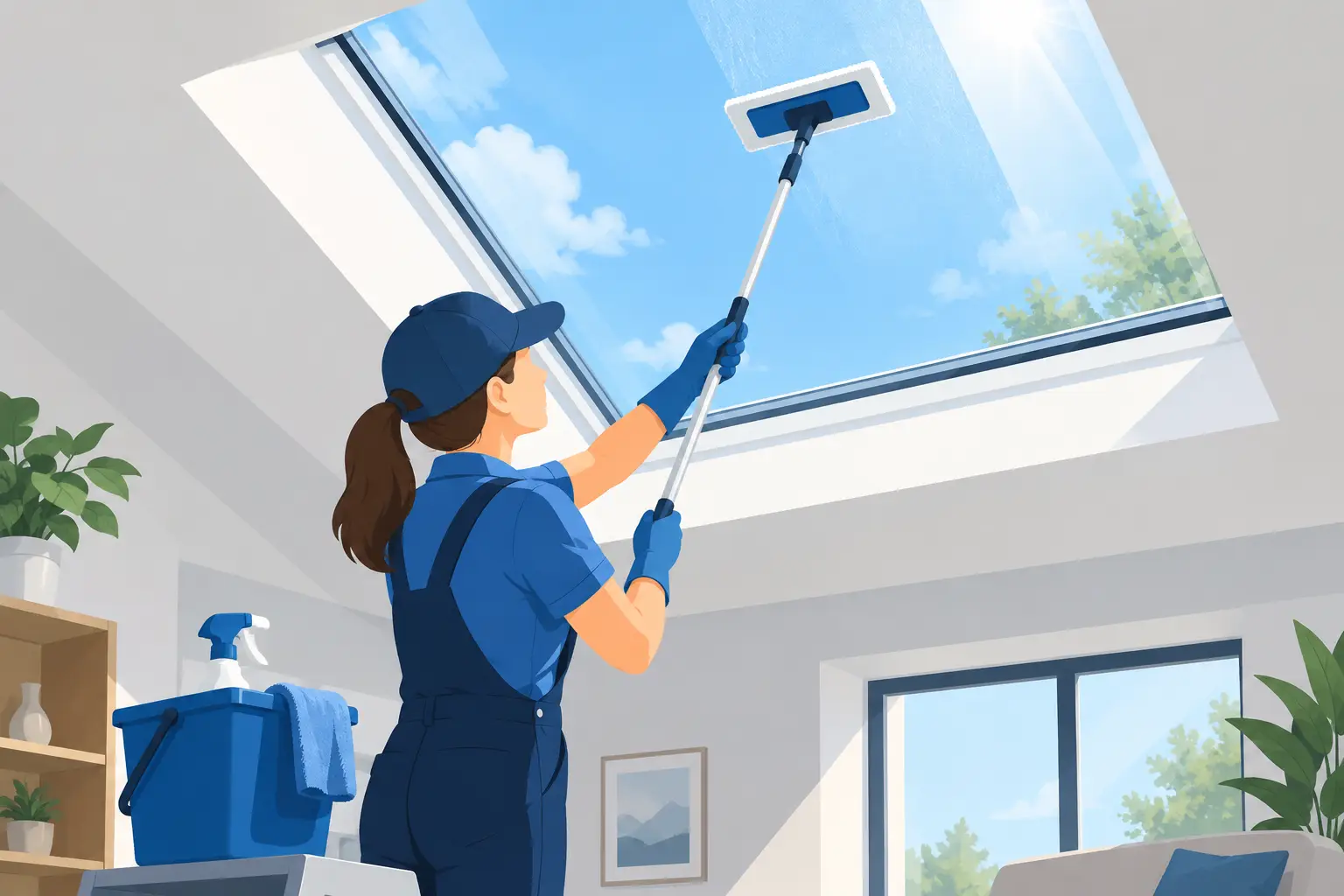
A skylight should bring more light into your home, not draw attention to dust, streaks, or cloudy glass. This skylight cleaning guide explains how to care for skylights safely, what causes stubborn buildup in Southern California, and when a professional cleaning is the better move. A clean skylight brightens rooms, sharpens curb appeal, and helps you enjoy the view overhead without climbing onto the roof.
Why Skylights Need Different Care
Skylights take on more than regular windows. They collect windblown dust, pollen, bird droppings, tree debris, mineral-rich sprinkler overspray, and residue left behind after a rare but messy rain. On the inside, cooking oils, humidity, fingerprints, and cobwebs can slowly dull the glass.
The challenge is access. A skylight may sit on a steep roof, over a stairwell, or several feet above a hard interior floor. That makes a quick DIY clean much riskier than washing a reachable bathroom window. The glass itself can also have special coatings, tinted panes, acrylic panels, or delicate seals that deserve the right tools and touch.
For most homes, cleaning skylights twice a year is a solid starting point. Homes near construction, busy roads, large trees, or frequent sprinkler spray may need attention every three to four months. Commercial properties with overhead glass often need a more consistent schedule to keep their space polished for customers and staff.
Check the Skylight Before You Clean
Start from the ground and from inside the home. Look for cracked glass, yellowing acrylic, loose flashing, damaged screens, or signs of moisture between panes. Condensation around the inside frame can be a ventilation issue, while a brown ceiling stain or active drip may point to a leak that cleaning will not solve.
Also pay attention to the weather. Avoid cleaning in direct, hot afternoon sun. Cleaning solution can dry before you rinse it, leaving streaks and spots behind. A mild morning or overcast day gives you more working time and better visibility.
If you can only reach the skylight by stepping onto a roof, stop there. Roof surfaces can be slippery even when they look dry, and skylight glass is never a surface to stand on. Saving a little time is not worth a fall, a broken panel, or an expensive roof repair.
What You Need for Safe Skylight Cleaning
For reachable interior glass, keep the process simple: use a soft microfiber cloth, a clean bucket of water, a gentle glass-safe cleaner, and a dry microfiber towel for the edges. A microfiber mop with an extension pole is useful for high interior skylights, provided you can keep both feet safely on the floor.
Exterior cleaning requires more care. A soft-bristle brush, a clean water-fed pole, and purified water can remove loose debris and rinse glass without leaving soap film behind. Pure water cleaning is especially helpful for skylights because it dries spot-free and reduces the need to work close to the roofline.
Avoid abrasive pads, razor blades, steel wool, and harsh chemicals. They can scratch glass, damage coatings, haze acrylic, or wear down surrounding seals. Strong cleaners may seem like a shortcut against water spots, but they can create a bigger problem than the spot itself.
How to Clean an Interior Skylight
Begin by removing dry dust and cobwebs. A dry microfiber cloth or soft duster works well. Do not start with a wet cloth on a dusty pane, since that can turn loose dirt into muddy streaks.
Next, lightly apply your glass cleaner to the cloth or cleaning pad rather than spraying upward at the skylight. This helps prevent drips from running into the frame, drywall, or opening mechanism. Wipe from top to bottom in overlapping passes, using gentle pressure.
Dry the edges and frame with a separate towel. Moisture left in corners can attract dust and, over time, may affect wood trim or paint. If your skylight opens, wipe the accessible tracks carefully and clear loose debris so it can close properly.
Tall skylights above staircases deserve extra caution. An extension pole may reach the glass, but it does not make a ladder on uneven stairs safe. In that situation, professional service is usually the practical choice.
Exterior Skylight Cleaning Without Risky Shortcuts
Exterior glass should be rinsed before it is scrubbed. Dry grit can scratch a skylight when rubbed across the surface. Use clean water to loosen dust, pollen, and debris, then gently agitate remaining grime with a soft brush designed for glass.
Rinse thoroughly. In Corona, Norco, Eastvale, and surrounding communities, hard-water spotting is common where sprinkler overspray reaches glass. Leaving tap water to dry on the surface can add more mineral spots than you started with. Purified water removes that concern because it dries clean without residue.
Do not blast skylight edges with a pressure washer. High pressure can force water beneath flashing or strain seals. It can also push dirt into areas that are difficult to inspect. A controlled, low-pressure rinse is the safer approach.
If leaves or roof debris have gathered around the skylight, treat that as a roof-maintenance task, not just a glass-cleaning task. Debris can trap moisture and affect drainage. A trained technician can clean the glass while watching for conditions that may need a roofer’s attention.
Common Skylight Problems and What They Mean
Not every cloudy skylight needs a stronger cleaner. Sometimes the issue is on the outside, but sometimes it is inside the glass unit or in the material itself.
Water spots usually appear as white, chalky marks and often come from sprinklers or mineral deposits. Fresh spots may lift with a gentle glass-safe process. Older etched deposits may require professional restoration, and some severe etching cannot be fully reversed.
Fogging between double-pane glass is different. It often means the insulated seal has failed, allowing moisture to enter the space between panes. Surface cleaning will not remove it. The skylight may need repair or replacement, depending on its design and condition.
Yellowing or fine cracks in an acrylic skylight can signal age and sun exposure. Do not use aggressive products to chase clarity. A professional can help you determine whether careful cleaning is worthwhile or whether replacement makes more sense.
When Professional Skylight Cleaning Makes Sense
Professional help is not only for neglected glass. It is the smart call whenever your skylight is on a second story, positioned on a steep roof, above a stairwell, or coated with stubborn hard-water residue. It also makes sense when you want the job handled efficiently without buying specialized poles, equipment, and safety gear.
At Window Cowboys, trained and insured technicians use professional methods, including pure water glass cleaning, to help exterior glass dry spot-free with less ladder use. That means a brighter result without turning your weekend into a risky roof project.
For business owners, regular skylight and glass cleaning keeps lobbies, showrooms, offices, and customer-facing spaces looking cared for. Light travels farther through clean overhead glass, and a well-maintained property sends a clear message before anyone reaches the front desk.
Keep the Shine Going Between Cleanings
A few small habits can extend the life of a professional clean. Redirect sprinklers away from the roofline and skylights, trim branches that drop leaves or sap, and check interior frames after heavy rain. If you see a new stain, drip, or loose trim, address it early rather than waiting for the next cleaning.
Most of all, let the condition of your skylight guide the plan. Reachable interior glass may be an easy household task. High, exterior, or heavily spotted skylights deserve professional care. Clear overhead glass has a simple way of making a room feel bigger, lighter, and more welcoming – and that is a view worth protecting.