
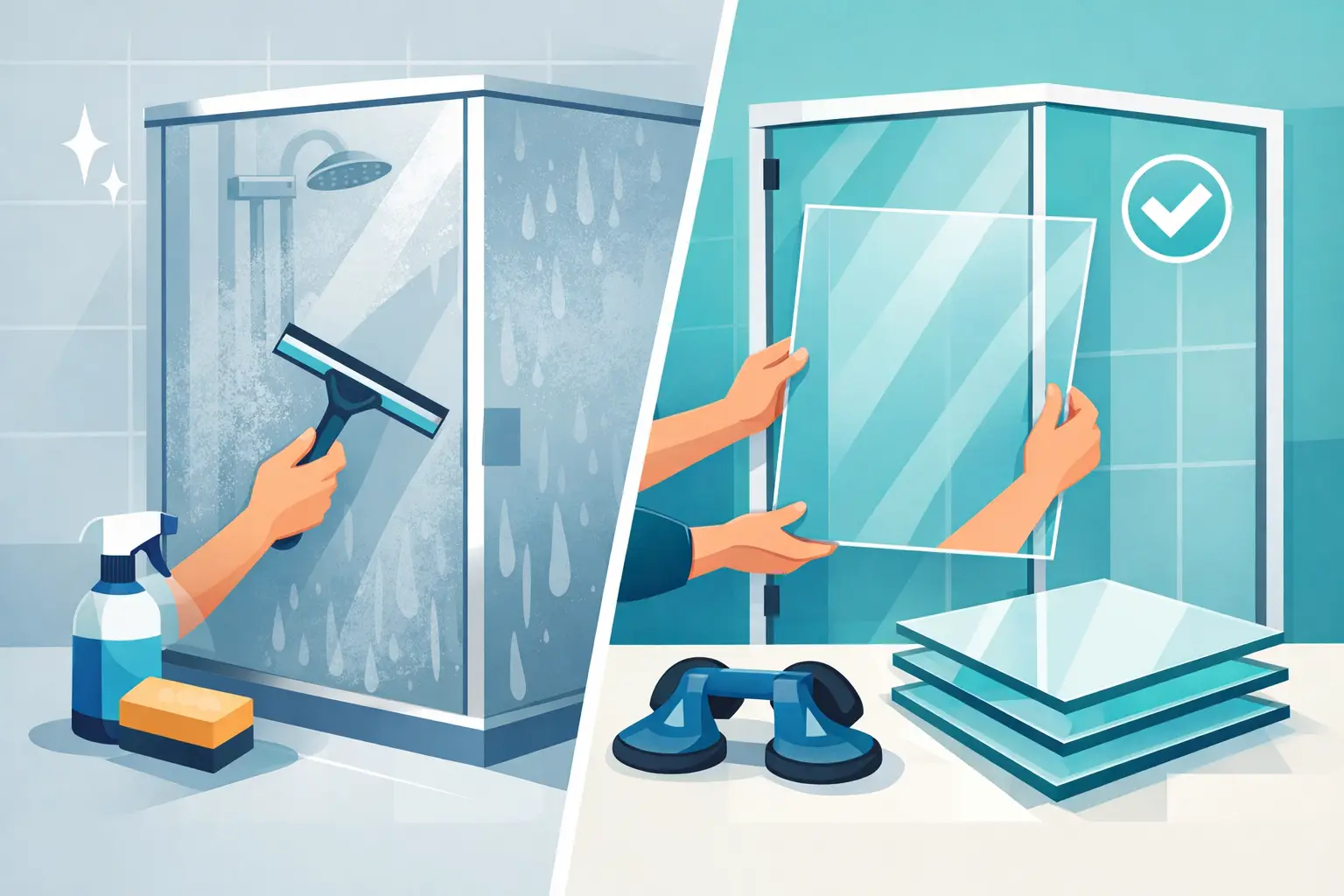
A shower door can look permanently worn out long before it actually is. Those cloudy white marks, dull streaks, and rough spots are often blamed on age, but Southern California hard water is usually the real culprit. When weighing shower glass restoration vs replacement, the right answer comes down to what is on the glass, how deeply it has damaged the surface, and whether the door itself still works safely and properly.
Replacing a shower enclosure is a major project. It can involve measurements, demolition, hardware decisions, tile protection, installation, and a much bigger bill than many homeowners expect. Restoration can be a smart first move when the glass is structurally sound but simply no longer looks clean. The key is knowing when professional cleaning can bring back the shine and when replacement is the more honest, long-term choice.
What Makes Shower Glass Look Beyond Cleaning?
Most shower glass problems begin with mineral buildup. Water dries on the glass, leaving calcium, magnesium, and other minerals behind. Soap residue, body oils, shampoo overspray, and cleaning products give those deposits something to cling to. Over time, the surface can look hazy, spotted, or yellowed even right after it has been cleaned.
At first, hard-water deposits sit on top of the glass. Later, they can bond more tightly to it. In severe cases, mineral deposits and harsh cleaning habits contribute to etching, which is physical damage to the glass surface. That difference matters. Surface buildup may be removable; etched glass cannot be polished back to factory-new condition in every situation.
A quick test can offer a clue. If the spotting feels raised, gritty, or rough to the touch, there is likely mineral buildup that may respond well to restoration. If the glass feels smooth but looks permanently foggy, or if it has tiny pitted areas visible in direct light, etching may be involved. A professional inspection is the safest way to set expectations before anyone starts scrubbing.
Shower Glass Restoration vs Replacement: The Main Difference
Restoration focuses on improving the glass you already have. A trained glass-care technician uses appropriate products, tools, and controlled techniques to remove soap film, mineral scale, and residue without damaging the door, hardware, tile, or surrounding finishes. The goal is clearer glass, cleaner edges, and a bathroom that feels brighter again.
Replacement means removing the existing panel, door, or full enclosure and installing new glass and hardware. It is the right path when the existing system is damaged, unsafe, poorly functioning, or no longer fits the bathroom’s needs. Replacement can also be a design upgrade if you want a frameless enclosure, different finish, wider opening, or a complete remodel.
Neither option is automatically better. Restoration offers value when the problem is cosmetic. Replacement earns its cost when the problem is structural, mechanical, or beyond what careful glass cleaning can reasonably correct.
When Restoration Is Usually Worth Trying
Restoration is often the practical choice when the shower door is intact, the hinges and track work correctly, and the glass has hard-water spotting, soap scum, or neglected buildup. It is especially useful for homeowners who are preparing for guests, refreshing a bathroom before listing a home, or simply tired of a shower that never looks clean.
A good restoration appointment can make a surprising visual difference because shower glass affects the whole room. Clearer panels allow more light through, make tile look cleaner, and remove that dull film that makes even a well-kept bathroom feel tired.
Restoration also makes sense when the budget is better spent elsewhere. If the enclosure fits well and you like its style, there is little reason to replace it just because hard water has stolen the sparkle. Professional cleaning is generally far less disruptive than an installation project, and it avoids putting usable glass into the waste stream.
That said, restoration is not a promise that every mark will vanish. Deep etching, scratches, discoloration inside double-pane glass, and damaged protective coatings may remain visible. A trustworthy service provider should explain what can improve and what may be permanent before work begins.
When Replacement Is the Better Call
Choose replacement when the glass is cracked, chipped along an edge, loose in its frame, or compromised in any way that raises a safety concern. Tempered shower glass is designed for bathroom use, but damaged glass should never be ignored. Do not try to aggressively clean a cracked panel or a door with failing hardware.
Replacement is also appropriate when doors drag, leak because of worn seals or poor alignment, refuse to close properly, or have corroded tracks and hardware that cannot be reliably repaired. Cleaning can improve the appearance of a shower door, but it cannot fix an enclosure that no longer functions as it should.
There are aesthetic reasons to replace, too. If your bathroom is being remodeled, the existing framed door may not suit your new tile, fixtures, or layout. A new enclosure can change the feel of the room. Just remember that brand-new glass will develop hard-water spotting quickly without consistent care, especially in areas with mineral-heavy water.
Cost, Time, and Disruption Matter
For many households, the practical decision begins with cost. Restoration typically requires a service visit and careful labor, while replacement may include custom glass fabrication, new hardware, removal, installation, and possible repair work around the opening. The price gap can be substantial.
Time is another consideration. A professional cleaning or restoration service can often be completed without turning the bathroom into a construction zone. Replacement may require measuring, ordering materials, scheduling installation, and limiting use of the shower during the process.
The lowest immediate price is not always the best value, though. If the glass is badly etched or the door leaks, repeatedly paying for cleaning will not solve the underlying issue. On the other hand, replacing a sound enclosure before attempting restoration can mean spending thousands to fix a problem that was mostly mineral buildup. An honest condition assessment keeps the decision grounded.
Avoid DIY Fixes That Can Make It Worse
When shower glass looks cloudy, it is tempting to reach for abrasive powders, razor blades, steel wool, or highly acidic cleaners. These methods can scratch glass, damage coatings, discolor metal hardware, weaken seals, or etch nearby stone and tile. Mixing household cleaners can also create dangerous fumes.
A mild, shower-safe routine is better for everyday upkeep. After showering, use a squeegee to remove water from the glass and leave the door open long enough for air to circulate. Clean regularly before minerals have time to harden. If the buildup has already become stubborn, professional service is a safer next step than escalating to harsher products.
For homeowners in Corona, Norco, Eastvale, and nearby Riverside County communities, hard water can turn a small maintenance issue into a stubborn glass-care problem fast. Window Cowboys can evaluate shower glass buildup and provide professional cleaning designed to improve clarity without the guesswork, mess, or risky DIY trial and error.
Protect the Results After Restoration
The best way to make restoration last is simple: do not let water dry on the glass day after day. A quick squeegee takes less than a minute and makes a real difference. Use a soft microfiber cloth around edges and hardware, where moisture and soap residue tend to collect.
Keep cleaners gentle and rinse them thoroughly. Products that leave a heavy film can attract more buildup, making the glass look streaky sooner. If your household uses the shower heavily, a recurring professional cleaning schedule can help prevent the return of the thick, stubborn scale that is hardest to remove.
If you decide to replace the enclosure, establish these habits from the first week. New glass is not immune to hard water. Treating it well early is the easiest way to protect both its appearance and your investment.
A cloudy shower door does not always mean you need a new one. Start with a realistic evaluation of the glass, the hardware, and the results you want. When the enclosure is safe and sound, restoring its clarity can bring back a clean, polished bathroom and a little more joy every time you step inside.