


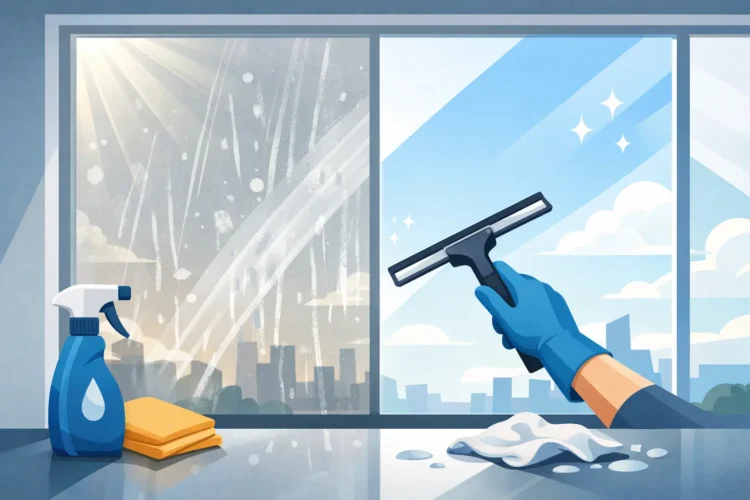
You finish cleaning the glass, step back, and somehow the windows look worse in the sunlight than they did before. If you have ever asked what causes streaks on windows, the short answer is this: residue, bad timing, or the wrong technique. The longer answer matters, because streaks usually come from a few fixable problems that keep glass from drying evenly.
Around homes and businesses in Southern California, streaks are especially frustrating because bright sun exposes every swipe, drip, and missed edge. Clean glass should brighten your space, not leave behind a cloudy reminder of the work you just did. Once you know what is actually causing the streaks, it gets much easier to avoid them.
What causes streaks on windows most often?
Most streaks are not dirt in the usual sense. They are leftover material spread thinly across the glass. That could be soap residue, hard water minerals, dust turned to mud, oils from hands, or cleaning solution that dried before it could be properly removed.
A lot of people assume more cleaner means better results. In reality, too much product is one of the most common reasons windows streak. If the solution is not fully wiped away, it leaves a film. That film may be hard to see right away, but as light hits the glass, the streaks show up fast.
Drying speed also plays a big role. When windows are cleaned in direct sun or on hot glass, the solution can evaporate before it is squeegeed or buffed off. That leaves uneven lines and patches. It is not that the cleaner failed. It is that the glass dried on its own instead of being finished properly.
The hidden residue problem
Residue is the biggest culprit behind streaky windows. Store-bought glass sprays, dish soap mixes, and multipurpose cleaners can all leave behind material that looks clean at first but creates haze and lines once dry.
Soap is a frequent offender. Dish soap cuts grease well, but if the mix is too strong, it leaves a film on the surface. The same goes for many household glass cleaners. They can work for touch-ups, but if too much is used or if dirty towels keep spreading the product around, the window never gets fully clean.
Paper towels can make this worse. Some break down as they get wet and leave lint or fibers behind. Others simply push cleaner around instead of lifting it off the glass. That is why a window can look smeared even after several passes.
Older buildup is another issue. If a window has been cleaned repeatedly with the wrong products, layers of residue can develop over time. Then each new cleaning wakes that film back up and drags it around the pane.
Hard water stains are different from streaks
This is where it depends. Sometimes what looks like a streak is not a fresh cleaning mistake at all. It is mineral staining from sprinklers, hose spray, rain runoff, or hard water that has dried on the glass over time.
Hard water leaves behind calcium and magnesium deposits. Those minerals do not wipe away like soap film. They can create cloudy areas, vertical lines, or spots that seem permanent. If standard cleaning is not touching them, the issue is probably mineral buildup rather than ordinary streaking.
That matters because the fix is different. More glass cleaner will not solve hard water staining. In some cases, aggressive scrubbing can even scratch the glass if the wrong tools are used.
Dirty tools create clean-looking streaks
One of the most overlooked answers to what causes streaks on windows is dirty equipment. A towel that looked fine in the laundry room may be full of fabric softener residue. A squeegee blade may have a nick in it. A bucket of water may already be carrying dust and grit from the first few windows.
Microfiber towels help, but only if they are actually clean. If they have been washed with dryer sheets or fabric softener, they often leave smears. Those laundry products are designed to coat fabric, which is exactly the opposite of what you want on glass.
Squeegees are even more sensitive. A professional-quality squeegee can leave glass nearly spotless, but only if the rubber edge is smooth and the technique is controlled. A damaged blade leaves lines. A blade that is not wiped between passes can drag dirt or excess water back across the pane.
Even frames and tracks matter. If dust, cobwebs, or loose debris around the window are not removed first, they can wash right onto the glass during cleaning. Then the person cleaning ends up chasing grime from one side to the other.
Sun, heat, and weather work against you
Southern California gives us a lot of bright days, which is great for enjoying clear windows and not so great for cleaning them. Direct sunlight heats the glass and speeds up evaporation. That means the cleaning solution can flash-dry before you finish the section.
Wind does not help either. A breezy day can blow dust onto wet glass or dry the edges too quickly. Low humidity can have the same effect. The result is often a window with clean sections mixed with drying lines and patchy areas.
This is why timing matters more than people realize. Early morning, shaded conditions, or cooler parts of the day usually produce better results. It is not just about comfort. It is about controlling how fast the glass dries.
Technique matters more than people think
Many streaks come down to the process, not the product. If too much water stays on the glass, it has to go somewhere. It runs, pools at the edges, or dries into lines. If the final wipe misses the perimeter, those edges often drip later and leave thin marks once dry.
Circular wiping is another common cause of smears. It feels thorough, but it can spread residue around instead of removing it cleanly. Overlapping straight passes with a clean towel or proper squeegee stroke usually works better.
Pressure matters too. Press too lightly and residue stays behind. Press too hard with the wrong towel and you can create static, lint, or uneven marks. Good window cleaning is simple, but it is not random. The details show up fast on glass.
Interior streaks vs. exterior streaks
Inside glass and outside glass usually streak for different reasons. Interior windows often collect fingerprints, cooking oils, pet nose prints, smoke residue, and dust from HVAC systems. Those soils are greasy and tend to smear if the cleaner is not strong enough or the towel is overloaded.
Exterior windows deal with mineral deposits, pollen, irrigation overspray, insect debris, and airborne dirt. On commercial properties, traffic film and pollution can add another layer. That grime needs to be safely removed before the final finish work begins, or the cleaning process just spreads it around.
This is one reason some windows seem impossible to get right with a quick spray bottle routine. The type of contamination on the glass changes the method needed.
Why professional results look different
Professional window cleaning is not just someone wiping harder. Better results usually come from using purified water, proper squeegees, clean detailing cloths, and a method designed to remove residue instead of moving it around.
Pure water cleaning is especially helpful on exterior glass because it removes minerals and impurities from the rinse water itself. That means there is far less chance of spots or residue being left behind as the window dries. It also helps with upper-floor windows where traditional methods can be slower, riskier, or less consistent.
For property owners, the real benefit is not only appearance. It is convenience, safety, and consistency. You get glass that sparkles without spending your weekend battling ladders, hot panes, and mystery streaks that keep coming back.
How to prevent streaks the next time you clean
The fix starts with using less product, not more. Clean the frame first, choose a truly clean microfiber or fresh squeegee blade, and avoid washing glass in direct sun whenever possible. Work in smaller sections so the cleaner does not dry before you remove it.
If the window still looks smeared after repeated cleaning, stop assuming it just needs another pass. That usually means there is residue buildup or hard water staining on the surface. At that point, the right tools and experience matter more than extra effort.
For homes and businesses that want clear, bright glass without the trial and error, this is where a professional service earns its keep. Window Cowboys helps local property owners get that clean, streak-free shine with trained technicians, pure water technology, and the kind of finish that makes the whole property feel sharper.
Clean windows should make your day a little brighter. If yours keep showing every swipe in the sun, the problem is usually not bad luck – it is a fixable cause hiding on the glass.