


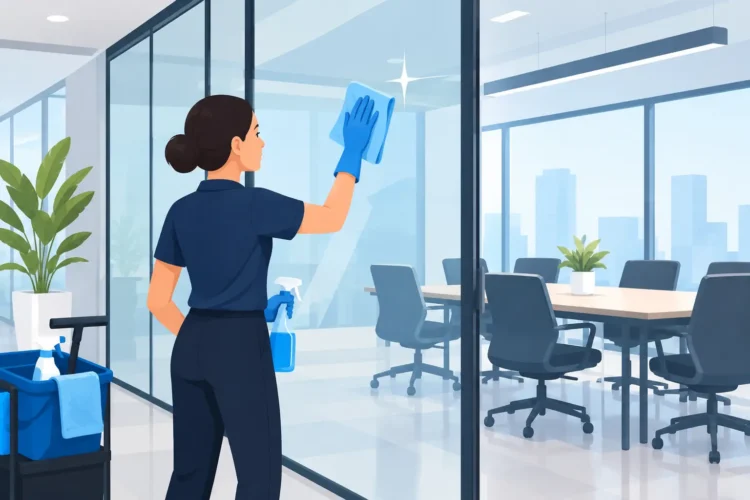
Glass partitions make an office feel open, modern, and bright – until fingerprints, dust, and mystery smudges begin stealing the view. Knowing how to clean office glass partitions properly keeps your workplace looking polished without leaving behind streaks, cloudy residue, or damage to surrounding frames and finishes.
For offices in Corona, Norco, Eastvale, and throughout Riverside County, clean glass does more than improve appearances. It helps daylight travel farther through the building, makes meeting rooms feel more inviting, and gives employees, clients, and visitors a better first impression. The good news is that routine glass care is straightforward when you use the right tools and avoid a few common mistakes.
Start With the Right Tools
Office glass is usually easier to maintain than exterior windows because it is not exposed to hard water, pollen, and road grime. Still, it collects oils from hands, airborne dust, food splatter near break areas, and residue from stickers or tape. Reaching for paper towels and whatever spray cleaner is under the sink may seem convenient, but that combination often creates lint, haze, and endless wiping.
For clean, clear results, use a clean microfiber cloth, a quality squeegee with a sharp rubber blade, a bucket of clean water, and a glass-safe cleaning solution. A second dry microfiber cloth is useful for detailing edges, corners, and any drips along the frame.
Avoid abrasive sponges, rough shop towels, and powder cleaners. Glass itself is durable, but many office partitions include coated glass, frosted designs, decorative film, aluminum channels, painted trim, or silicone seals that can be scratched or dulled by harsh products.
How to Clean Office Glass Partitions Step by Step
The process matters as much as the product. Cleaning glass too quickly, using dirty tools, or spraying heavily across the whole panel can leave a streaky finish that looks worse once the sun hits it.
1. Remove dust before adding cleaner
Start by wiping loose dust from the partition, frame, and lower tracks with a dry microfiber cloth. This small step prevents dust from turning into muddy streaks when moisture is added. Pay extra attention to edges, handles, and areas around conference room doors where hands regularly touch the glass.
If the partition has tracks at the bottom, vacuum or wipe them first. Built-up debris in tracks can transfer back onto the glass or make the entire area look neglected, even when the pane is spotless.
2. Use a light, even amount of solution
Apply glass cleaner to your microfiber cloth or applicator rather than soaking the glass. This gives you better control and prevents overspray from landing on nearby desks, electronics, carpet, or wall finishes.
For everyday cleaning, a mild commercial glass cleaner works well. If you prefer a simple mix, use clean water with a small amount of dish soap. The goal is lubrication that lifts fingerprints and grime, not a thick layer of product. Too much cleaner is one of the main causes of residue.
Be careful with frosted or etched glass. Test any new product on a discreet area first, especially if the surface has privacy film, printed logos, or decorative vinyl. Some cleaners can weaken adhesive edges or leave uneven-looking patches on specialty finishes.
3. Clean from top to bottom
Work from the top of each panel down so drips do not run over an area you have already finished. Loosen grime with your damp cloth using overlapping passes. For stubborn fingerprints, pause for a moment to let the solution work instead of scrubbing aggressively.
On large partitions, clean one manageable section at a time. A full-height glass wall can dry before you get to it, particularly in a warm Southern California office with strong natural light. Working in sections helps prevent dried cleaner marks.
4. Squeegee for a streak-free finish
A professional squeegee is the difference between “pretty clean” and clear, polished glass. Starting near the top edge, pull the blade in smooth, controlled strokes. Wipe the rubber blade with a clean towel after each pass so it does not carry dirty water across the next section.
For narrow panels, a straight top-to-bottom pull is usually easiest. On wider partitions, use a consistent side-to-side pattern and overlap each pass slightly. Keep the blade angled so water moves toward the uncleaned area rather than dripping behind you.
Finish by drying the perimeter with a fresh microfiber cloth. This removes the thin moisture line that can collect along frames and become visible later.
5. Detail handles, frames, and touch points
A spotless panel with greasy door handles still feels unclean. Wipe handles, push plates, frame edges, and commonly touched areas with an appropriate surface cleaner. If your office has a high volume of visitors, cleaning touch points more often than the full glass panels can keep the space looking cared for between scheduled cleanings.
The Mistakes That Leave Glass Cloudy
The most frustrating glass-cleaning problems are usually preventable. Paper towels can shed lint and often require too much rubbing. Old microfiber cloths can hold oils and residue if they have been washed with fabric softener. A worn squeegee blade may leave thin water lines no matter how carefully you clean.
Direct sunlight can also work against you. When cleaner dries too quickly, it leaves visible streaks or mineral-like spots. If possible, clean glass partitions during a cooler part of the day or work in small sections with minimal solution.
Another common issue is using the wrong cleaner for the material. Ammonia-based products may be fine for plain glass, but they are not always the best choice for tinted films, printed graphics, or certain specialty coatings. When in doubt, choose a mild, glass-safe cleaner and test it first.
Set a Cleaning Schedule That Fits Your Office
How often you clean office glass partitions depends on traffic, layout, and how the space is used. A quiet private office may only need a detailed cleaning every few weeks. A busy lobby, sales floor, medical office, gym, or shared conference room may need touch-up cleaning several times a week.
A practical approach is to wipe fingerprints and handles as needed, clean interior glass weekly or biweekly, and schedule a more complete service when the entire office needs attention. This includes glass walls, entry doors, sidelights, interior windows, and partitions that are easy to overlook during day-to-day cleaning.
For offices with abundant glass or upper-level panels, professional service can save your team time and reduce risk. Ladders, tight furniture layouts, and hard-to-reach glass create safety concerns that are not worth handing to an employee with a spray bottle. Trained technicians use proper tools, safe access methods, and professional techniques to produce a more consistent finish.
When Professional Glass Cleaning Makes Sense
Routine wipe-downs are manageable for many offices. But if the glass has persistent haze, construction dust, hard water marks, adhesive residue, or streaks that return immediately, a deeper professional cleaning may be the better move. The same applies when your team is spending too much time maintaining large glass walls instead of serving customers or running the business.
Window Cowboys provides commercial glass cleaning with the dependable scheduling and polished results local businesses expect. For exterior glass and difficult-to-reach windows, pure water cleaning technology can deliver a spot-free finish without leaving soap residue behind.
Clear office glass is a small detail with a big visual payoff. Keep the right tools on hand, clean touch points before they become obvious, and bring in experienced help when the job calls for safer access or a higher level of shine. A brighter workspace gives everyone one more reason to feel good walking through the door.