


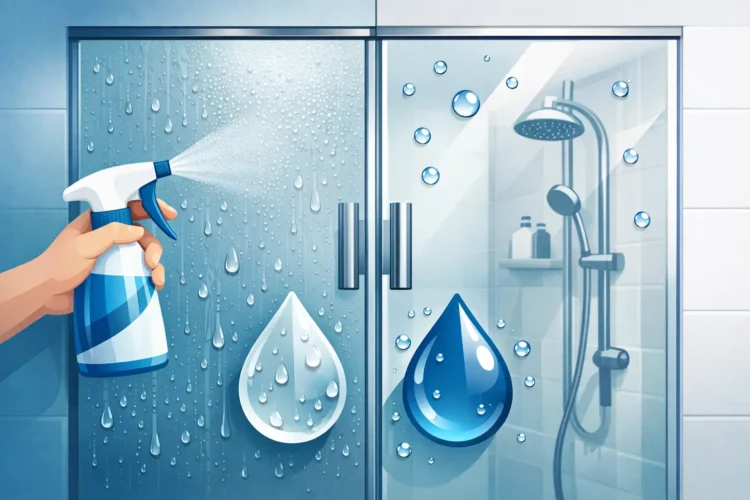
A shower door can look freshly cleaned on Saturday and cloudy again by Tuesday. In Corona, Norco, Eastvale, and across Riverside County, hard water is usually the reason. Finding the best shower door water repellent is less about chasing a miracle bottle and more about choosing the right protection for your glass, then applying it to a perfectly clean surface.
A good repellent makes water bead and roll away instead of drying into spots. That means less scrubbing, fewer mineral deposits, and a shower that stays brighter between cleanings. It will not eliminate maintenance forever, but it can make one of the most frustrating glass-care jobs far easier.
What Makes a Shower Door Water Repellent Worth Using?
The best products create a thin, clear barrier that reduces the surface friction on glass. Water has less to grab onto, so droplets bead up and slide down the door. Soap residue, body oils, and minerals are less likely to bond to the surface as well.
The payoff is practical. You still need to squeegee or wipe the glass, especially in a busy family bathroom, but the job takes seconds instead of turning into a weekend scrubbing project. Repellent also helps preserve that clean, open look that makes a bathroom feel larger and more polished.
For Southern California homes, hard-water performance matters most. When water evaporates, it leaves minerals behind. A water repellent slows the buildup, but it cannot stop minerals from appearing if standing droplets are left to dry every day. The strongest routine combines a quality coating with a quick squeegee after each shower.
The Best Shower Door Water Repellent Depends on the Glass
There are two main types of products homeowners will see: spray-on water repellents and longer-lasting glass coatings. Both can work well, but they serve different needs.
Spray-on repellents for easy upkeep
Spray-on repellents are the practical choice for homeowners who want quick results without a complicated process. They are usually simple to apply: clean the glass, dry it completely, apply the product, and buff away any haze. Many need to be refreshed every few weeks, depending on shower use and water hardness.
This type is a solid fit when the shower door is already in good condition and you are willing to do light upkeep. It is also a good starting point if you have never used a repellent before. The trade-off is durability. A spray product may wear away faster under daily hot-water exposure and frequent cleaning.
Glass coatings for longer protection
Longer-lasting coatings are designed to bond more firmly to the glass. Some last for months, while professional-grade treatments can offer extended protection when properly applied and maintained. They generally cost more and demand more careful prep, but they are worth considering for newer frameless doors, high-end bathroom renovations, or glass that receives heavy daily use.
The key word is prep. A premium coating applied over soap scum or mineral haze will lock in the problem rather than solve it. If the glass feels rough, looks white around the edges, or has dull spots that do not wipe away, clean and restore it before applying any protectant.
Look for These Features Before You Buy
Do not judge a repellent only by a bold promise on the bottle. The right option should be labeled for shower glass, not just vehicle windshields or exterior windows. Bathroom glass faces heat, humidity, soap, shampoo, and daily contact that outdoor glass does not.
Choose a product that dries clear and is designed to resist water spotting. If your home has hard water, prioritize mineral-spot resistance over a vague claim of “extra shine.” Also check whether the product is safe for coated or treated glass. Some shower doors come with factory-applied protective finishes, and using an incompatible cleaner or coating may interfere with that finish.
Avoid products that leave a greasy, rainbow-like film or require harsh abrasives to remove. A repellent should make the glass look clearer, not create a new layer of haze. Strong fragrances and aggressive solvents are not signs of better protection, either. In a small bathroom, a low-odor product with clear application directions is often the smarter choice.
Prep Is the Difference Between Great Results and Streaks
The most common mistake is applying water repellent to a shower door that only looks clean. Glass can hold invisible soap residue, conditioner oils, and mineral deposits that prevent a coating from bonding evenly.
Start by removing loose dust and hair, then use a shower-safe glass cleaner or mineral-deposit remover appropriate for your door. Work in a small area, rinse thoroughly, and inspect the glass from different angles. If it still looks cloudy or feels rough when dry, it needs more cleaning before protection goes on.
Once the glass is clean, dry it completely with a lint-free microfiber towel. Pay special attention to the bottom edge, corners, and areas near metal tracks. Moisture can dilute the product, cause streaking, or keep it from curing correctly.
For stubborn hard-water damage, a professional cleaning may be the better first move. Old mineral deposits can etch glass, which means the cloudiness may no longer be sitting on the surface. In that situation, a repellent can protect the door going forward, but it cannot reverse permanent damage.
How to Apply Water Repellent Without the Haze
Always follow the product label first, since cure times and application methods vary. Still, the general process is straightforward. Apply the repellent in a cool, well-ventilated bathroom, not while the glass is hot from a recent shower. Use a clean microfiber applicator or towel, and work in overlapping sections so you do not miss the edges.
Use less product than you think you need. Overapplying is one of the biggest causes of smears and cloudy streaks. Let the product sit only as long as directed, then buff the glass with a separate dry microfiber towel until it looks crystal clear.
Most products need time to cure before the next shower. Do not rush this step. If the instructions say to keep the glass dry for several hours or overnight, treat that as part of the job. A properly cured treatment performs better and lasts longer.
Before coating the entire door, test a small, inconspicuous section. This is especially wise if you have textured, patterned, tinted, or factory-coated glass. It gives you a chance to check for haze, compatibility issues, and the water-beading effect you want.
Keep the Repellent Working Between Deep Cleanings
A water repellent is a maintenance helper, not a permission slip to ignore the shower door. The best habit is also the simplest: squeegee the glass after each shower. It takes less than a minute and keeps minerals from drying onto the protected surface.
Use a soft microfiber cloth for quick touch-ups and avoid abrasive pads, steel wool, or harsh powdered cleaners. Those products can scratch glass and strip the protective layer sooner. If you use a daily shower spray, confirm that it is compatible with your repellent. Some cleaners contain ingredients that shorten a coating’s life.
Watch for the change in water behavior. When water stops beading and begins to spread into sheets, it is usually time to clean the glass and reapply the product. In a lightly used guest bath, that may be months. In a main bathroom with hard water and multiple daily showers, it may be much sooner.
When a Water Repellent Is Not Enough
If your shower door has thick white scale, dark mildew around seals, rusty hardware stains, or cloudy etched patches, protection is only one part of the solution. The glass may need a careful restoration cleaning before any coating can do its job.
This is where calling in a glass-care professional can save time and prevent expensive mistakes. Window Cowboys can help bring neglected shower glass back to a cleaner, brighter condition, then help you start a maintenance routine that keeps the shine going. Professional attention is particularly useful for large frameless doors, delicate glass, and buildup that has been sitting for years.
The right shower door water repellent should make your routine feel lighter, not add another complicated chore. Start with clean glass, apply a compatible product carefully, and make the squeegee part of your daily finish. That small habit keeps hard water from stealing the sparkle you worked to restore.